
Premium SEO software can cost more each month than many freelancers, students, and small businesses can comfortably spend. That price gap is why SEO group buy tools have become a popular search topic. These services promise access to well-known keyword research, backlink analysis, and site audit platforms for a fraction of the official price.
The idea sounds simple, but the details matter. Some buyers save money and get useful data. Others lose access without warning, expose their login details, or run into terms-of-service problems they didn't expect.
This guide gives you a clear, balanced look at the category so you can make an informed decision.
What you'll learn:
- What SEO group buy tools are and how the sharing model works
- The real pros, cons, and risks, including legal and ethical concerns
- Who these services suit, and who should avoid them
- A practical checklist for evaluating any provider before you pay
Key Takeaways
- SEO group buy tools let multiple users share access to premium SEO software, usually for a lower price than individual subscriptions.
- They can help with short-term research, learning, and testing, but access is often limited and less reliable than official plans.
- Many premium SEO platforms prohibit account sharing in their terms of service, so group buys can carry legal, ethical, and account-security risks.
- Before choosing a provider, check transparency, refund terms, security practices, uptime history, and support quality.
- Legitimate alternatives such as free tiers, trials, official team plans, and freemium tools may cover your needs at low or no cost.
What Are SEO Group Buy Tools?
SEO group buy tools are services that pool money from many users to share access to premium SEO software. Instead of paying for a full subscription on your own, you pay a smaller fee to a group buy provider. The provider then gives you some form of shared access to one or more tools.
You'll also see this model called group buy SEO tools or SEO tools sharing. The terms all describe the same basic arrangement: many people, one or more paid accounts, and a lower cost per person.
What Kinds of Tools Are Usually Included?
Group buy packages often bundle several types of software into one budget SEO toolkit. Common categories include:
- Keyword research tools for finding search volume, difficulty, and related terms
- Backlink analysis tools for checking a site's link profile
- Rank trackers for monitoring keyword positions over time
- Site audit tools for spotting technical SEO issues
- Content optimization tools for comparing your pages against top-ranking competitors
- Writing and grammar tools, plagiarism checkers, and stock media services
In short: SEO group buys are cost-sharing arrangements that bundle access to premium tools at lower prices.
How Do Group Buy SEO Tools Work?
Most providers follow a similar pattern, though the technical setup varies. Understanding it helps you judge reliability and risk.
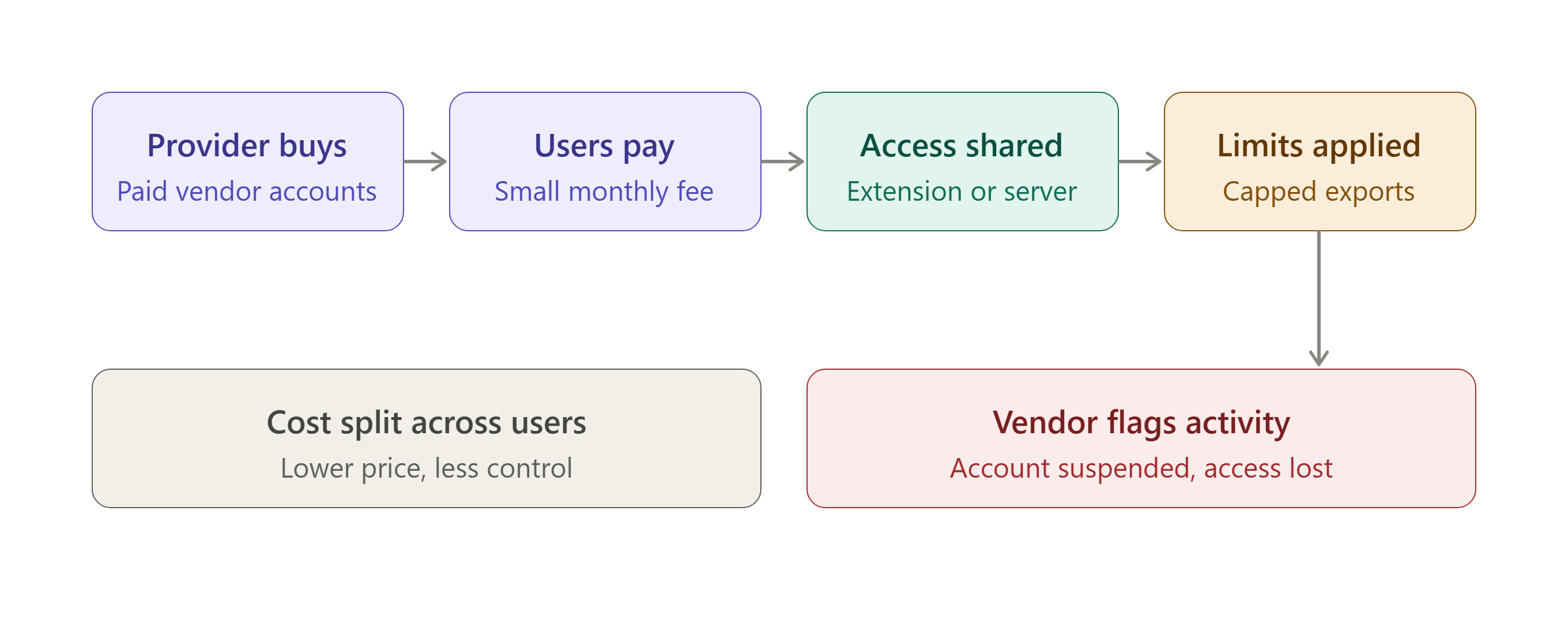
Step 1: The Provider Buys Subscriptions
The provider purchases one or more paid accounts for each tool. These may be individual, team, or agency plans.
Step 2: Access Is Shared Among Many Users
Users pay the provider, usually monthly. In return, they get access through one of a few common methods:
- Browser extensions that load the shared session
- Remote desktop or cloud servers where the tools run
- Proxy-based dashboards that route users through a single login
- Direct credentials, which is the least secure method
Step 3: Usage Limits Are Applied
Because many people share one account, providers often limit daily searches, exports, or features. Some tools may be read-only. Others may block certain sections to protect the account from being flagged.
Step 4: Access Can Change Without Notice
If the tool vendor detects unusual activity, the shared account may be suspended. Providers may then switch accounts, pause access, or drop the tool entirely.
In short: You pay a provider, they share a premium account through a browser extension or server, and your access depends on that account staying active.
Pros of SEO Group Buy Tools
It's fair to acknowledge why people use these services. For some buyers, the appeal is real.
Lower Upfront Cost
The main draw is price. A shared plan can cost far less than paying for several premium subscriptions individually. For someone on a tight budget, this can make advanced data feel within reach.
Access to Multiple Tools in One Package
Many providers bundle a range of tools together. That lets you compare platforms, test features, and see which ones fit your workflow.
Useful for Learning and Short-Term Projects
Students, career switchers, and new freelancers sometimes use group buys to get familiar with industry-standard tools. A one-off competitor analysis or short client audit is another common use.
In short: The benefits center on cost savings, variety, and low-commitment exploration.
Cons and Risks You Should Know
Here's the key difference between a group buy and an official subscription: you don't control the account. That single fact drives most of the downsides.
Unreliable Access
Shared accounts can be suspended at any time. If you rely on a tool for daily client work, an outage could disrupt deadlines or reporting.
Limited Features and Usage Caps
You may not get full exports, historical data, project tracking, or API access. Rank tracking and saved projects are especially hard to maintain in a shared environment.
Security and Privacy Concerns
Some access methods require installing extensions or connecting to remote servers you don't control. That can expose browsing data, cookies, or project information. Entering client domains into a shared account also means other users may see that data.
Weak or Inconsistent Support
Official vendors offer customer support, documentation, and onboarding. Group buy providers vary widely, and some offer little help when things break.
No Recourse With the Original Vendor
If something goes wrong, the tool's creator won't help you. Your only relationship is with the reseller.
In short: The tradeoff for a lower price is less reliability, fewer features, and more security risk.
Legal and Ethical Considerations
This is the section many guides skip, and it matters. A balanced decision means looking at more than price.
Terms of Service Restrictions
Many premium SEO platforms restrict account sharing in their terms of service. A single-user license is typically meant for one person. When an account is shared among many buyers, that use may breach the agreement between the vendor and the account holder.
The consequences usually include account suspension or termination. Depending on the jurisdiction and circumstances, there may also be broader legal exposure. If you're unsure, review the tool's official terms or consult a qualified legal professional.
Ethical Questions
SEO software companies invest heavily in data collection, crawling infrastructure, and product development. Unauthorized sharing reduces the revenue that funds those tools. Each buyer has to weigh that impact for themselves.
Professional and Client Risks
If you're an agency or freelancer, using shared access for client work may create problems. Clients may expect licensed tools, confidential handling of their data, and dependable reporting. A sudden loss of access can also hurt your credibility.
How to Stay on Safer Ground
- Read the terms of service for any tool you plan to use
- Prefer authorized reseller or team arrangements when available
- Avoid entering sensitive client data into shared accounts
- Use official free tiers or trials when you only need limited access
In short: Group buys often conflict with vendor terms, so understand the legal, ethical, and professional implications before you commit.
Common Use Cases for SEO Tools Sharing
Different users come to this category with different goals. Here's how the fit varies.
Students and Learners
People studying digital marketing often want hands-on experience with professional platforms. Free trials, education programs, and freemium tools are usually safer starting points, though some learners explore group buys.
Freelancers on a Budget
New freelancers may need occasional keyword or backlink data before they can justify a full subscription. For recurring client work, an official entry-level plan is usually more dependable.
Bloggers and Niche Site Builders
Bloggers often need keyword ideas and competitor insights but not daily heavy usage. Lightweight or freemium tools can cover much of this.
Small Businesses
Small business owners doing their own SEO may want occasional audits. Many free tools from search engines themselves provide strong foundational data.
Agencies Testing Tools
Some agencies want to compare platforms before choosing one. Official trials and demos are the cleaner way to do this.
In short: Light, short-term, or learning-focused use is where shared access is most often considered, but legitimate low-cost options frequently cover the same needs.
Who Should and Shouldn't Use Group Buy SEO Tools
May Be Worth Researching If You:
- Are exploring the category and want to understand your options
- Need limited, non-sensitive data for a short personal project
- Have reviewed the risks and terms and accept the tradeoffs
Probably Not a Good Fit If You:
- Handle confidential client data
- Need dependable daily access for reporting or deadlines
- Rely on rank tracking, saved projects, or API integrations
- Want to stay fully compliant with software licenses
How to Evaluate an SEO Group Buy Provider
If you decide to explore this route, careful evaluation reduces your risk. Use this checklist before paying anyone.
1. Transparency
A trustworthy provider explains how access works, which features are limited, and what happens if a tool goes down. Vague promises like "100% uptime forever" are a warning sign.
2. Access Method and Security
Ask how you'll connect. Be cautious with extensions that request broad permissions. Never reuse personal passwords, and avoid entering payment or client credentials into shared environments.
3. Refund and Replacement Policy
Look for clear written terms. What happens if a tool stops working mid-month? Do you get a refund, credit, or replacement?
4. Track Record and Reviews
Search for independent feedback across forums and communities, not just testimonials on the provider's own site. Look for patterns in complaints about downtime or support.
5. Support Quality
Send a pre-sale question and see how quickly and clearly the provider responds. That's a good preview of support after you pay.
6. Trial or Short-Term Plans
Start with the shortest commitment available. Avoid long prepaid plans until you've tested reliability yourself.
7. Payment Protection
Use payment methods that offer buyer protection. Be careful with providers that only accept irreversible payment options.
In short: Prioritize transparency, security, clear refunds, independent reviews, and short-term testing.
Legitimate Alternatives to Build a Budget SEO Toolkit
You may not need a group buy at all. Many affordable SEO tools and official options can cover a surprising amount of work.
- Free tools from search engines: Webmaster platforms from major search engines show real impressions, clicks, indexing issues, and queries for your own site.
- Free tiers and freemium plans: Many SEO platforms offer limited free access for keyword lookups, site audits, or backlink checks.
- Free trials: Short trials let you complete a focused project or compare tools before buying.
- Entry-level and lite plans: Some vendors offer lower-priced plans for individuals and small sites.
- Official team or agency plans: If several colleagues need access, an authorized multi-seat plan keeps everyone compliant.
- Browser extensions and lightweight tools: Many low-cost extensions provide quick on-page and keyword insights.
- Spreadsheets and manual research: Search suggestions, "People Also Ask" boxes, and competitor reviews still reveal valuable keyword ideas.
A practical approach is to combine free search engine data with one paid tool that matches your main need. That often delivers more stable value than a large shared bundle.
In short: Free tools, trials, and entry-level official plans can form a reliable, compliant budget SEO toolkit.
Common Mistakes to Avoid
- Choosing on price alone. The cheapest offer often comes with the most downtime and least support.
- Prepaying for long periods. Shared access can disappear, so long commitments increase your risk.
- Ignoring security. Installing unknown extensions or reusing passwords can expose your data.
- Using shared accounts for client work. This can create confidentiality and reliability problems.
- Skipping the terms of service. Knowing the rules helps you understand the real risk.
Frequently Asked Questions
What are SEO group buy tools?
SEO group buy tools are services that let multiple users share access to premium SEO software for a lower individual price. A provider buys subscriptions and distributes access through browser extensions, remote servers, or shared dashboards.
Are SEO group buy tools legal?
It depends on the tool and jurisdiction, but many premium SEO platforms prohibit account sharing in their terms of service. Using shared access may breach those terms and lead to account suspension. Review each tool's official terms and seek legal advice if you need certainty.
Are group buy SEO tools safe to use?
They carry security risks. Some access methods require installing extensions or using remote servers you don't control, which can expose your data. Use unique passwords, avoid sharing sensitive information, and research the provider carefully.
Why are SEO group buy tools so cheap?
The low price comes from splitting one subscription's cost across many users. In exchange, buyers usually get limited features, usage caps, and less reliable access than an official plan.
Can I use SEO group buy tools for client work?
You can, but it's risky. Shared accounts may expose client data to other users, and sudden suspensions can disrupt reporting. Official licensed plans are generally better suited to professional client work.
What are the best alternatives to SEO tools sharing?
Strong alternatives include free search engine webmaster tools, freemium SEO platforms, free trials, entry-level official plans, and authorized team subscriptions. Combining free data with one focused paid tool often works well on a budget.
How do I choose a reliable SEO group buy provider?
Look for transparency about access and limits, secure connection methods, a clear refund policy, independent reviews, responsive support, and short-term plans you can test first.
Do group buy tools give full access to premium features?
Usually not. Providers often restrict exports, project tracking, historical data, and API access to protect shared accounts from detection or overuse.
Conclusion: Make an Informed Choice
SEO group buy tools offer a lower-cost path to premium software by sharing accounts among many users. The savings can be appealing, especially for learners and budget-conscious freelancers. However, the tradeoffs are real: unreliable access, limited features, security concerns, and frequent conflicts with vendor terms of service.
The smartest move is to match your choice to your actual needs. Start with free search engine data and official free tiers. If you need more, test a trial or entry-level plan. If you still want to explore group buys, use the evaluation checklist above and begin with the shortest commitment possible.
Pooltool.org is here to help you research the category with clear, balanced information, so you can compare options, understand the risks, and build a budget SEO toolkit that truly works for you.
Which SEO task matters most to you right now: keyword research, backlinks, or technical audits? Let that answer guide your next step.


